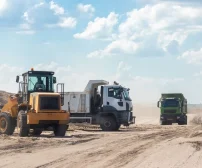


New developments don’t fail because of bad architecture or wrong material choices. They fail because the ground beneath them wasn’t prepared properly. Every slab, footing, drainage line, and structural wall that goes up during a build depends entirely on what happened at ground level before any of that work began. Earthmoving contractor services are the foundation on which every other trade is built, and the decisions made during this phase shape project cost, timeline, and structural performance for decades. This post is written for developers, site managers, and project owners who are past the basics and want to understand what separates a development that runs smoothly from one that hits expensive, avoidable problems at the earthworks stage.
Why Earthmoving Decisions Get Made Too Late
One of the most consistent mistakes in new development planning is treating earthmoving as a construction-stage decision rather than a feasibility-stage one. By the time most project owners engage earthmoving contractor services, the design is locked, the budget is set, and any site conditions that don’t match assumptions become expensive problems to solve rather than variables that could have shaped the plan. Bringing an experienced earthmoving contractor into the conversation during feasibility, before design is finalized, produces measurably better outcomes.
Reading a Site Before a Single Machine Arrives
The difference between a contractor who reads a site and one who reacts to it becomes clear very quickly once excavation begins. A thorough pre-excavation assessment goes well beyond walking the boundaries and taking a few photographs. It involves reviewing survey data, understanding drainage patterns, identifying access constraints, and cross-referencing any available historical information about how the land was previously used. Contractors who invest time in this phase encounter fewer surprises, sequence their work more efficiently, and hand off to following trades in better condition. Those who skip it spend the project managing problems that were visible from the beginning to anyone who knew where to look.
Soil Investigation Beyond the Basic Report
Most developments commission a geotechnical report to satisfy a compliance requirement, and then file it away without acting on what it actually says. An experienced earthmoving contractor reads that report differently. They look at soil classifications to determine which machines will perform best in those conditions. They assess bearing capacity data to anticipate where fill will be required and to what depth compaction needs to be achieved. They check groundwater levels to plan dewatering requirements before the site gets wet and the problem becomes urgent. The difference between a geotechnical report treated as a formality and one genuinely used to inform earthmoving decisions can be measured directly in cost variations, timeline accuracy, and finish quality.
Identifying Hidden Site Risks That Change Everything
Underground utilities, unmarked drainage lines, historical fill material, and contaminated soil are not rare discoveries on urban or semi-urban development sites. They are common, and they are expensive when they surface without warning during active excavation. Experienced contractors know what to look for during the pre-assessment phase: inconsistencies in survey data, neighboring property drainage patterns that suggest subsurface water movement, and council records that indicate previous land use. Identifying these risks before work begins allows them to be managed as planned scope items rather than emergency variations. Early identification consistently saves more in time and cost than the assessment itself takes to complete.
The Real Cost of Choosing the Wrong Earthmoving Contractor
Price-driven contractor selection at the earthmoving stage is one of the most damaging decisions a developer can make, and it’s one of the most common. A low-bid contractor who is under-equipped, under-experienced, or simply under-scoped for the site will produce problems that cost far more to fix than the initial saving was worth. Remobilization fees, rework costs, delays caused by inadequate equipment, and the downstream effect on every trade waiting to follow earthworks all accumulate quickly. The cheapest quote seldom reflects the full scope of what the site actually requires, and the gap between what was quoted and what the job actually costs tends to surface at the worst possible time in a project schedule.
What to Look for Beyond Pricing When Evaluating Contractors
Experienced project managers evaluate earthmoving contractors on criteria that go well beyond the dollar figure at the bottom of the proposal. Equipment fleet condition and size relative to project scope matters because an under-resourced contractor will take longer and produce more variable results. Operator experience on similar soil types and project categories matters because techniques and judgments developed on comparable sites transfer directly to the quality of output. Insurance and compliance documentation matters because gaps in coverage become the project owner’s liability when something goes wrong. Perhaps most telling is how a contractor talks about your site before they’ve been engaged. A contractor who asks specific questions about soil conditions, access constraints, and sequencing requirements before committing to a price understands what they’re taking on.
Red Flags in Contractor Proposals That Most Clients Miss
A contractor proposal tells you a great deal about how a contractor thinks before a single machine arrives on site. Vague scope descriptions that don’t specify material disposal, compaction standards, or finish tolerances leave enormous room for scope disputes later. Missing mobilization and demobilization costs suggest the proposal was built to win the job rather than to honestly represent the work. No allowance for unexpected material or ground conditions means any discovery during excavation becomes an immediate variation claim. Unrealistic timelines that don’t account for weather, soil drying requirements, or compaction testing cycles indicate that the schedule was set to look competitive rather than to reflect how the work actually needs to unfold. Read every proposal critically and ask specific questions about anything that isn’t clearly defined.
Sequencing Earthworks Within a Broader Construction Timeline
Earthmoving doesn’t happen in isolation and it can’t be scheduled as if it does. It has to be sequenced correctly within the full project timeline, and it has to finish in a condition that allows the next trade to begin without delay or remediation. Experienced earthmoving contractors understand how their work connects to civil engineering, drainage installation, and foundation construction, and they plan their sequencing with those handoffs in mind. When earthmoving finishes late or leaves a site in poor condition, the costs compound quickly across every trade that follows. Excavated areas left open too long and compromised by rain, fill placed before adequate compaction testing, and access tracks not established early enough to support concrete trucks are all avoidable sequencing failures that appear regularly on sites where earthworks weren’t planned with the full project timeline in view.
Bulk Earthworks vs. Detail Earthworks: Understanding the Difference
Many project owners treat earthmoving as a single uniform phase when it is actually two distinct scopes of work that require different equipment, different skill sets, and sometimes different contractors entirely. Bulk earthworks cover large-scale material removal, filling, and rough shaping of a site. Detailed earthworks covers precise grading, trim cutting for footings, and final surface shaping that directly sets up concrete and drainage work for success or failure. Confusing these two scopes leads to poor finish quality, footing inaccuracies, and drainage problems that only become apparent after construction is well underway. On smaller projects with straightforward soil conditions, a single capable contractor can manage both phases effectively.
Managing Earthmoving Contractor Services on a Live Development
Once work begins, effective management of earthmoving contractor services requires more active involvement than most project owners anticipate. Daily site communication, progress measurement against agreed milestones, and a clear process for handling scope variations when unexpected conditions are encountered all contribute directly to how well the project runs. The best contractor relationships on active developments are collaborative rather than transactional. Project owners who stay engaged during earthworks, ask questions, and respond quickly to field-level decisions consistently achieve better outcomes than those who step back and wait for weekly updates. Real-time documentation of ground conditions, machine hours, material quantities, and any scope changes protects both parties and resolves the kind of end-of-project disputes that almost always trace back to something that wasn’t recorded on the day it happened.
Conclusion
Earthmoving is the one phase of a new development where the consequences of cutting corners are most severe and most lasting. The right earthmoving contractor services bring more than machines and operators to a project. They bring site knowledge, risk awareness, and sequencing experience that protect every trade that follows and every structure that gets built. Evaluate your next development’s earthmoving scope early, choose contractors based on demonstrated capability rather than lowest price, and treat ground preparation as the investment it genuinely is. The developments that perform best over time are almost always the ones where earthworks were done right from the beginning.